
Throughout the development of the plastics industry, material innovation and replacement have always been a key driver of industrial upgrading.
As a standout among specialty engineering plastics, PEEK (polyether ether ketone) distinguishes itself through comprehensive performance far exceeding that of conventional plastics. It has broken through the technological bottlenecks of high-end plastic products and fundamentally changed the long-standing situation in the plastics industry, where low-end products suffer from severe homogenization while high-end products rely heavily on imports. PEEK has therefore become a key force driving the plastics industry toward high-end, high-precision, and diversified development.
Conventional engineering plastics such as PA, PPS, and PC have obvious limitations in areas such as high-temperature resistance, wear resistance, and corrosion resistance, making them unable to meet the demanding requirements of high-end applications. The emergence of PEEK has filled this gap, making it a preferred material for high-end plastic products. As industrial upgrading continues, the depth and breadth of PEEK applications in the plastics industry are also expanding.
I. Key Advantages of PEEK Material: Outperforming Conventional Plastics and Meeting Demanding Operating Conditions
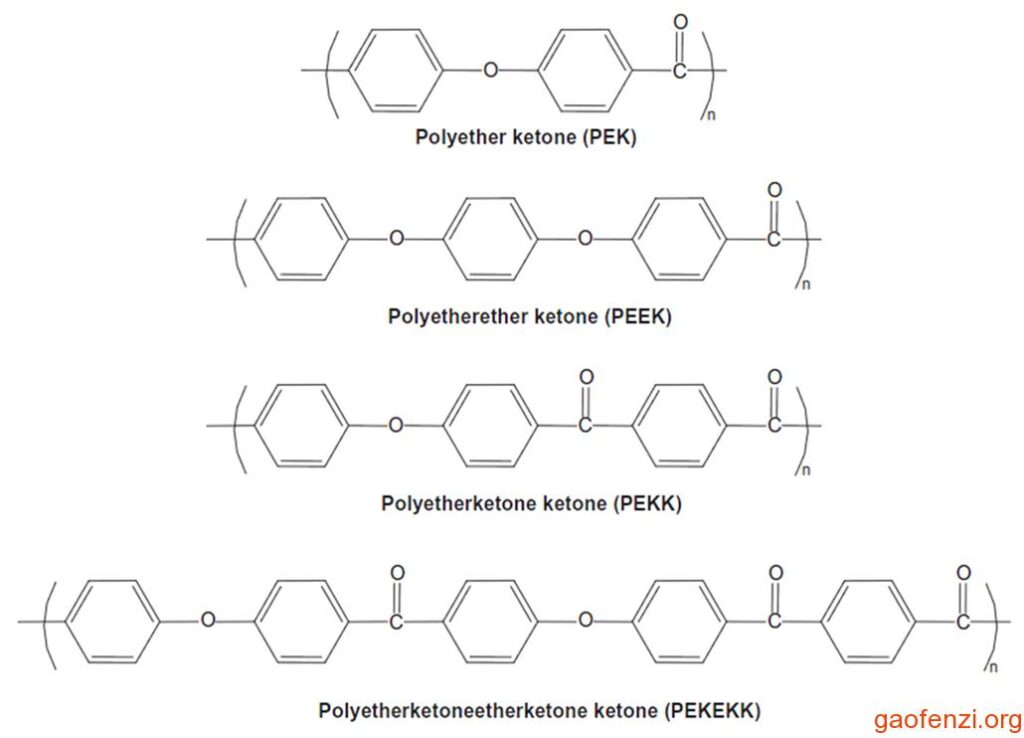
PEEK stands out in the plastics industry primarily because of its unique molecular chain structure. It is an aromatic, crystalline thermoplastic polymer. The orderly arrangement of benzene rings, ether bonds, and carbonyl groups in its molecular chains gives PEEK both the heat resistance and chemical stability typically associated with thermosetting plastics and the processability of thermoplastics. Its overall performance is unmatched by conventional plastic materials. In particular, its exceptional stability under extreme conditions has pushed the performance limits of plastic materials and become a key enabler for the plastics industry to move toward high-end applications.
1. Outstanding high-temperature resistance, breaking through the temperature limits of plastic materials: PEEK boasts a melting point of 334°C and offers excellent short-term and long-term heat resistance. Its heat deflection temperature is 160°C. When reinforced with 20%–30% glass fiber, the heat deflection temperature can be increased to 280–300°C, while its UL Relative Thermal Index (RTI) can reach up to 250°C. Its continuous-use temperature is approximately 200°C (and can reach up to 250°C in certain applications), while it can withstand temperatures of up to 300°C for short periods, far exceeding conventional engineering plastics (the long-term service temperature of PA is generally no higher than 120°C, while that of PPS is no higher than 220°C). PEEK also exhibits excellent thermal stability. When exposed to 420°C air for 2 hours, its weight decreases by only 2%; even at 500°C, the weight loss is only 2.5%, with significant weight loss occurring only at 500°C. Under high-temperature conditions, it does not soften, deform, or degrade, overcoming the tendency of conventional plastic materials to fail under high-temperature operating conditions. This makes it particularly suitable for high-end applications involving high-temperature injection molding and high-temperature service in the plastics industry. Meanwhile, its coefficient of thermal expansion can be optimized by adding glass fiber or carbon fiber, while its thermal conductivity can also be improved, making it more suitable for manufacturing precision plastic products with high dimensional stability. Even under high-temperature conditions, PEEK retains relatively high tensile strength and flexural modulus, providing excellent mechanical robustness.
2. Excellent mechanical properties, enabling the industry breakthrough of “replacing metal with plastic”: PEEK is a resin with excellent toughness. It has a tensile strength of 90–100MPa, a flexural strength of 160–180MPa, and an elastic modulus of 3.5–4GPa. When modified with 30% carbon fiber, its tensile strength can be increased to 190MPa, with a modulus of 17GPa, significantly outperforming other high-performance engineering plastics such as PPS and PEI. Its specific strength is 21 times that of steel and 8 times that of aluminum alloys, while its density is only 1.3g/cm³, approximately half that of metals. In plastic product manufacturing, PEEK can directly replace metal components, reducing product weight while lowering processing costs and helping drive the plastics industry toward lightweight and energy-efficient solutions. It is particularly suitable for manufacturing high-end precision plastic components. In addition, PEEK has an elongation at break of 20–50%, significantly higher than that of PPS (typically less than 5%), making it less susceptible to brittle fracture under impact and giving it a clear toughness advantage. At the same time, its long-term creep resistance and fatigue resistance are also among the best of thermoplastics, further extending the service life of plastic products.
3. Corrosion resistance, wear resistance, and self-lubrication for longer product service life: PEEK has extremely high chemical stability and can resist attack from almost all chemical reagents except concentrated sulfuric acid. It also maintains good chemical stability at relatively high temperatures. In addition, it offers excellent hot-water and steam resistance and can be used for extended periods in steam at 200–250°C, while maintaining stable performance in humid environments. Its water absorption is only 0.1–0.3%, far lower than that of PEI (1.25%), helping overcome the susceptibility of conventional plastic materials to corrosion and aging. PEEK also inherently provides self-lubricating properties and has a low coefficient of friction, with a wear rate significantly lower than that of materials such as UHMWPE and PTFE. It can operate reliably even without lubrication, making it suitable for manufacturing highly wear-resistant plastic components. This can significantly extend the service life of plastic products and reduce subsequent maintenance costs, which is also a key reason for its widespread use in industrial plastics.
II. Key Applications of PEEK in the Plastics Industry: Penetrating Multiple Fields and Enabling High-End Upgrades
As the plastics industry shifts toward high-end and precision-oriented applications, the applications for PEEK are also continuing to expand.
Today, PEEK has penetrated deeply into multiple segments of the plastics industry. From upgrading conventional plastic products to high-end products to the customized production of specialty plastic components, PEEK is gradually replacing conventional engineering plastics and becoming a core raw material for high-end plastic products, driving product upgrades across various market segments.
1. Precision injection molding: This is the core application area for PEEK in the plastics industry. Leveraging its excellent flowability (which can be optimized through modification) and dimensional stability, PEEK can be used to manufacture high-end precision plastic components, such as connectors, terminals, and wafer carriers in the electronics industry; sensor housings and transmission gears in the automotive industry; and precision bearings and seals in industrial applications. Compared with conventional plastic materials, PEEK injection-molded parts offer high dimensional accuracy, excellent resistance to deformation, and good aging resistance, enabling them to meet the stringent requirements of high-end products. They are particularly suitable for small precision injection molding equipment such as Valigoo’s desktop injection molding machines, which can be used for small-batch production of high-precision PEEK plastic components, helping fill the gap in high-end materials for precision injection molding with compact equipment.
2. Medical plastics: PEEK’s biocompatibility and sterilization resistance make it an ideal material for medical plastic products, overcoming the performance limitations of traditional medical plastics such as PVC and PP. It can be used to manufacture orthopedic implants such as artificial joints and bone plates, surgical instruments, dental restorations, and medical catheters. Its elastic modulus is close to that of human bone (3–4GPa), which can reduce the stress-shielding effect. In addition, it does not produce artifacts during CT or MRI imaging, giving it advantages over metal implants. PEEK medical plastic components can also undergo repeated high-temperature sterilization, providing both safety and durability and helping drive the medical plastics industry toward high-end, sterile solutions.
3. New energy vehicle plastics: PEEK can be used to manufacture insulation films for power battery packs, motor insulation components, high-voltage wiring harnesses, transmission components, and other parts. Its resistance to high temperatures, high voltage, and chemical corrosion helps ensure the stable operation of key components in new energy vehicles. At the same time, its lightweight properties can help reduce vehicle weight, improve energy efficiency, and lower energy consumption.
4. Electronics and semiconductor plastics: The electronics and semiconductor industries have extremely stringent requirements for the precision, purity, and temperature resistance of plastic components. PEEK can be used to manufacture key components such as semiconductor wafer carriers, high-temperature connectors, and insulating gaskets. Its resistance to high-purity chemicals, antistatic properties, and dimensional stability help ensure precision and stability in the chip manufacturing process while preventing impurities released by conventional plastic materials from affecting chip quality.
5. Industrial plastics: In industrial manufacturing, certain plastic components used under demanding operating conditions, such as downhole tools for oil exploration, wind turbine bearings, photovoltaic cassettes, and industrial valve seals, have extremely high requirements for wear resistance, corrosion resistance, and high-temperature resistance. Conventional plastic materials are simply unable to meet these requirements, whereas PEEK is well suited to such demanding applications.